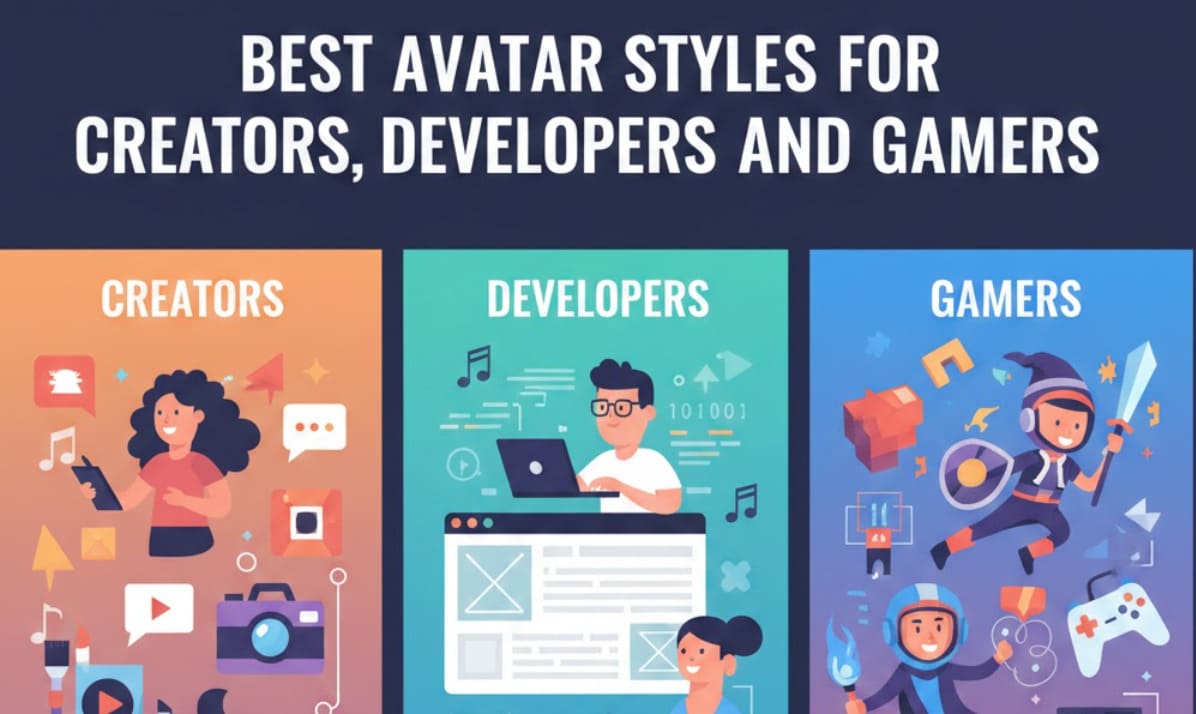
Most people seriously underestimate how much an avatar matters. In day-to-day online interactions, your avatar is often the first—and sometimes the only—visual signal people see before forming a judgment. Before they read your bio, post, or code, they’ve already decided if you seem credible, approachable, or contextually appropriate. That judgment usually takes two or three seconds, sometimes even less.
In comment threads, GitHub issues, Discord channels, X timelines, or YouTube replies, avatars quietly answer questions people don’t consciously ask:
- Does this person feel credible?
- Are they approachable?
- Do they belong in this space?
That’s why choosing an avatar purely based on aesthetics rarely works long term. What looks “cool” in isolation often fails when placed into real platform contexts. After years of running personal accounts, collaborating across communities, and observing responses across platforms, one conclusion becomes clear: avatar style is highly contextual.
What works beautifully for a creator may feel wrong for a developer. What feels expressive for a gamer may quietly undermine trust in professional spaces. This article is not a tool review or a step-by-step guide. It’s a practical reflection on avatar strategies in real online environments, and how strategically using an avatar maker allows you to adapt without losing identity.
Why “One Style Fits All” Is a Common but Costly Mistake
A persistent myth in personal branding is that consistency equals using one avatar everywhere. On paper, it sounds logical. In reality, it ignores how platforms actually operate. Each platform carries its own visual language, interface constraints, and social expectations. An avatar never exists in isolation—it’s framed by UI elements, content density, and audience mindset.
A friendly illustrated avatar that feels perfect on Instagram or YouTube can feel oddly unserious on GitHub. A clean Square Face avatar that works well in developer directories may feel cold or distant in a social feed.
This is where an avatar maker becomes a practical asset rather than a cosmetic tool. Instead of locking yourself into a single static image, a good avatar maker allows you to create variations of the same identity, adapted to context while maintaining recognizability. True consistency isn’t repetition—it’s continuity across environments.
The Danger of Ignoring Platform Contexts
Ignoring platform contexts can lead to unintended consequences. For instance:
- Using an overly cute Cat Avatar on LinkedIn may confuse potential collaborators.
- Deploying a detailed gaming avatar on GitHub can feel unprofessional.
- Keeping the same Roblox-style avatar across all social channels might dilute brand perception.
Using an avatar maker thoughtfully allows creators, developers, and gamers to craft context-aware avatars that maintain identity while respecting platform norms.
Creators: Your Avatar Sets Emotional Expectations Before Content Does
For creators—writers, educators, YouTubers, streamers, indie founders—avatars function as emotional introductions. People rarely follow creators purely for information. They follow tone, perspective, energy, and relatability. Your avatar quietly communicates what kind of interaction someone should expect from you.
What Works Best for Creators
For creators, the ideal avatar is approachable, expressive, and memorable. Tools like Cat Avatar and Adorable Profile Pictures Maker excel here because they allow subtle exaggeration and expression without losing recognizability.
Practical tips when designing creator avatars using an avatar maker:
- Prioritize facial focus: Eyes, mouth, and key expressions must remain legible. Subtle smiles or eyebrow raises create perceived warmth.
- Test at small sizes: Avatars shrink to 40×40 or 50×50 pixels on many platforms. Make sure your avatar remains recognizable.
- Warm color palettes: Warm, saturated colors evoke friendliness and human connection. Avoid overly muted or cold tones unless intentional.
- Slight exaggeration: Using an avatar maker, you can enlarge eyes, enhance contrast, or sharpen silhouettes to maintain visual impact across platforms.
- Platform context awareness: Consider how your avatar appears in feeds, comment sections, embedded widgets, and sidebars.
Case Study: Cat Avatar Success
A YouTuber I follow uses a Cat Avatar with exaggerated eyes and warm hues. Even in tiny comment avatars, viewers recognized her instantly and commented positively on her approachability. The avatar became part of her personal branding—without ever needing to explain herself in words.
Advanced Tips for Creators
- Iterative improvements: Use an avatar maker to slightly adjust expressions or color tones every 6–12 months to reflect evolving content or audience perception.
- Cross-platform testing: Preview avatars on mobile and desktop to ensure recognition and emotional impact are consistent.
- Seasonal variations: Subtle seasonal changes (hats, color tweaks) maintain freshness and engagement without losing identity.
A Grounded Caution for Creators
Not all content benefits from highly expressive avatars. Serious niches—finance, legal, policy, or technical deep dives—may require a restrained approach. Overly playful avatars can reduce perceived professionalism.
Practical adjustment: Use a neutral Square Face avatar or a toned-down Cat Avatar in your avatar maker while keeping core identity elements consistent. Experienced creators often update avatars over time to reflect evolving content and audience expectations.
Developers: In Technical Spaces, Clarity Is a Form of Respect
Developer environments operate under very different rules. On platforms like GitHub, GitLab, Stack Overflow, or technical Discord servers:
- Avatars are displayed at small sizes
- Seen in dense contributor lists or tables
- Scanned rather than studied
Here, emotional cues take a backseat. Clarity dominates.
What Consistently Works for Developers
Developers benefit from Square Face avatars for several reasons:
- Grid alignment: Square avatars integrate seamlessly into lists, dashboards, and tables.
- Minimalist design: Logos, initials, or clean illustrations keep visual noise low.
- Edge clarity: Sharp edges retain recognizability at tiny resolutions.
- Color restraint: Limited palettes improve legibility and prevent distraction.
A strategic avatar maker allows developers to create simple yet intentional designs. Clear shapes, minimal detail, and neutral colors signal competence and professionalism without appearing flashy.
Observation from Technical Communities
Developers who use overly polished or marketing-style avatars often feel less credible. Neutral visuals project focus and trustworthiness. Professional avatars don’t have to be boring—they just need to communicate purpose clearly.Practical tips for developer avatars:
- Preview your avatar in multiple environments (GitHub lists, Discord grids, forum threads)
- Avoid over-complication; too many details get lost at 40×40 pixels
- Use your avatar maker to tweak variations: alternate background colors for different projects while keeping core Square Face intact
Advanced Developer Practices
- Maintain avatar consistency across projects to strengthen personal branding in technical networks.
- Use avatar layers in your avatar maker: base face, accessory, color theme, allowing quick updates without redesign.
- Track avatar performance in community interactions to understand which variations convey trust and credibility most effectively.
Gamers: Avatars as Identity, Not Decoration
Gaming communities treat avatars differently from almost any other online space. Here, avatars are extensions of identity, representing mood, role, allegiance, and humor. Bold, stylized avatars dominate, and blending in can be detrimental.
What Works Best for Gamers
Successful gaming avatars often feature:
- Character-driven designs: Unique silhouettes make recognition easy in crowded leaderboards or chat feeds.
- Bold shapes and saturated colors: Immediate visual impact in small or fast-moving displays.
- Thematic alignment: Consistency with game aesthetics reinforces immersion.
- Iterative updates: Seasonal events, role changes, or guild affiliations often warrant slight avatar adjustments.
Tools like Roblox Avatar Maker excel here. They provide a visual language players already understand, letting users iterate quickly while maintaining core identity.
Case Study: Roblox Avatar Maker in Action
A Twitch streamer used Roblox Avatar Maker to adapt a single avatar for live streams and in-game identity. Adjusting colors, accessories, and silhouettes over time maintained recognition while reflecting seasonal events and game updates. The avatar remained instantly recognizable across platforms without breaking brand consistency.
Gamers’ Tips for Using an Avatar Maker
- Maintain a dual avatar system: one for gaming platforms, another for professional/social platforms.
- Use thematic consistency: avatars for guilds, clans, or seasonal events maintain engagement and immersion.
- Customize small details (color shifts, hats, accessories) to reflect progress, achievements, or events without changing core identity.
A Neutral but Important Note
Highly stylized avatars may not translate outside gaming contexts. Many gamers maintain two parallel avatars: one for games, another for social or professional platforms. This is not fragmentation—it’s contextual awareness. Using an avatar maker, multiple avatars can be managed without diluting brand identity.
How Avatar Makers Support Contextual Identity
Across creators, developers, and gamers, effective personal branding relies on avatars that are flexible, adaptable, and context-aware.
Practical Advantages of Using an Avatar Maker
- Platform adaptation: Different platforms crop and scale avatars differently. An avatar maker ensures your identity remains intact.
- Recognition across variations: Core elements stay consistent while format, color, or expression adjusts for context.
- Incremental updates: Modify small aspects over time instead of redesigning from scratch.
Implementation tips:
- Maintain a core identity layer: hairstyle, color palette, or signature silhouette. All variations should remain recognizable.
- Track avatar performance across platforms—see which avatars receive higher engagement and adjust accordingly.
- Consider seasonal or thematic updates to keep avatars fresh without losing identity.
Summary: Matching Avatar Style to Role and Platform
- Creators: Focus on emotion, approachability, and memorability. Tools like Cat Avatar and Adorable Profile Pictures Maker amplify engagement.
- Developers: Prioritize clarity, restraint, and trustworthiness. Square Face avatars preserve edges and maintain readability.
- Gamers: Emphasize identity, boldness, and thematic alignment. Roblox Avatar Maker helps integrate avatars into game universes.
Across all roles, adaptability is key. Effective personal brands don’t rely on a single rigid avatar. They use an avatar maker to produce context-aware variations while retaining core identity.
Treat Your Avatar as a Long-Term Tool
Your avatar is not decoration—it’s a functional interface between you and the internet. Before someone reads your content, reviews your code, or responds to a comment, your avatar has already communicated a message.
Thoughtful use of an avatar maker—whether Square Face, Roblox Avatar Maker, or Cat Avatar—gives you control over that first impression. Your avatar should evolve as you evolve, without losing the essence of who you are.
The internet moves fast. Your avatar should move with you, reflect context, and enhance your online presence.